I made this because I love it.
On December 26, 2025, Stake.com shipped what they called "the world's first AI slot generator" — SlotGPT. It paints AI symbols onto four pre-certified math templates. RTP locked at 96%. No rig, no animation, no bonuses, no export, no creator ownership. Twenty-seven thousand games were generated in the opening days. It's a player toy on Stake's casino floor. It is not the AI slot generator the industry needs.
Real games need rig control, math control, animation, audio, bonuses, and ownership. Real creators need a real IDE.
Brance Wages and I co-founded Dino Killers — a hyper-focused two-person studio. We're both lead developers across our product slate; on Slotica, I've been the primary builder for the last eight months working agentically, and Brance shipped the production stack that connects it all (Render, Supabase, Vercel) — taking it from localhost to a live demo casino in eight months. What you're about to see is 133,000 lines of working code, fifteen production tools across a manual full-suite IDE, forty-one AI tools driving Pit Boss (the conversational game-design agent), ten built-in house games — Plinko, Crash, Dice, Mines, Wheel, Limbo, Hi-Lo, Keno, Balloon, Chicken Road — and a complete demo casino at shadyluck.com you can play right now.
Slotica is the only end-to-end IDE that combines a manual full-suite toolkit, an AI game-design agent, and ten house games — exporting natively to Stake Engine SDK. SlotGPT generates games inside Stake's casino. Slotica generates studios.
One honest asterisk: my Python math export adapter is Q2 2026. Today, Slotica produces the TypeScript event runtime, components, and asset bundle. The math layer ships in weeks, not months — but I'd rather tell you that now than have you find it in a footnote.
I am not actively raising. I'm not in a hurry. But if this fits your thesis — operator content velocity, studio production multiplication, AI-native iGaming infrastructure, or a creator-side complement to a math platform like Stake Engine — I'd love to be on your radar. Book thirty minutes with me below.
If it doesn't fit, no hard feelings. I appreciate you reading this far.
The AI slot studio Stake should have built.
Manual full-suite IDE. AI game-design agent. Ten built-in house games. Native Stake Engine SDK output. One platform.
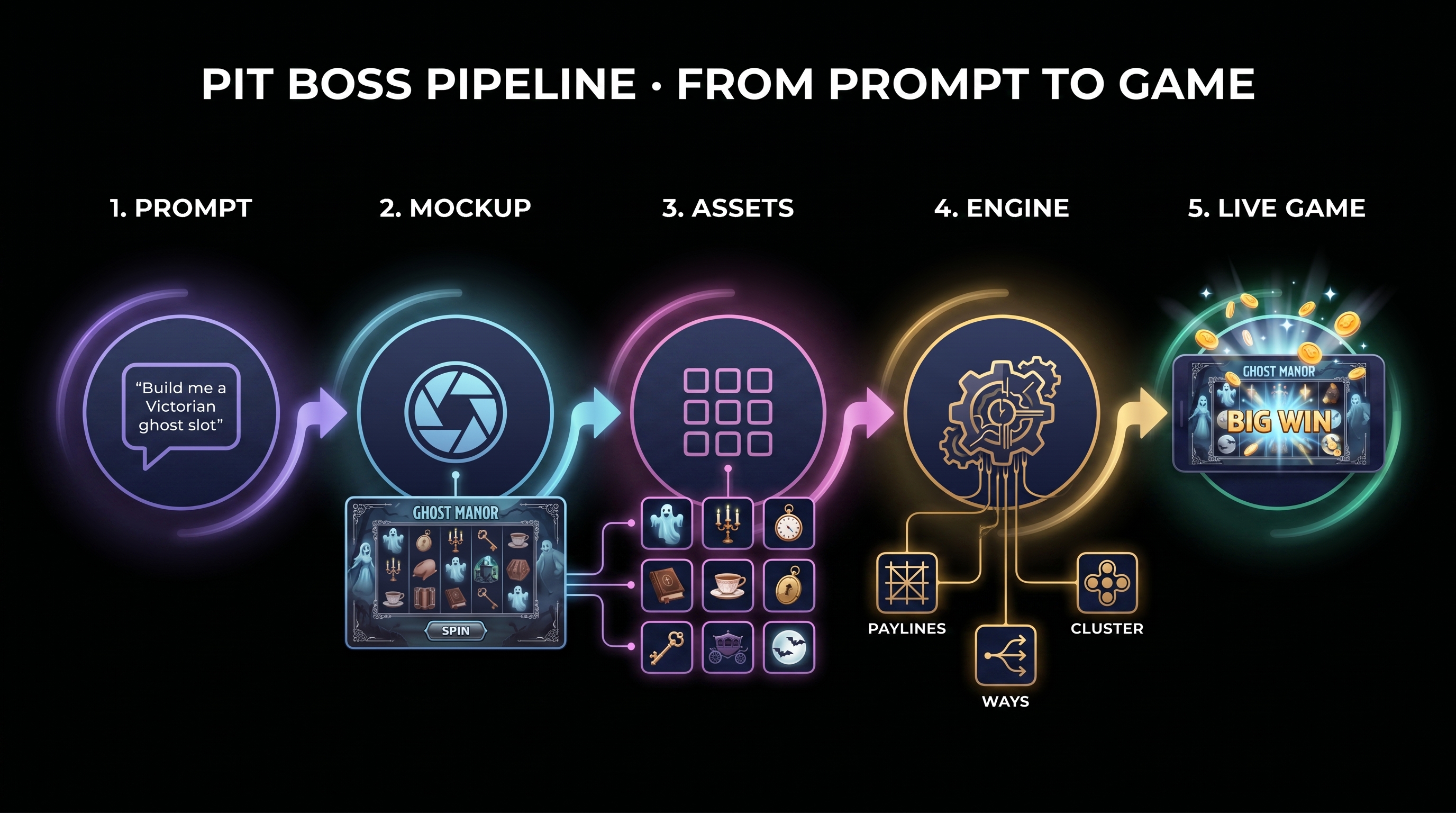
Type a prompt. Watch the game appear.
Pit Boss generates the mockup, decomposes symbols, builds the rig, weights the math, attaches animations, and ships a playable game. End to end.
$270M/year in production spend. No AI-native creator IDE.
The industry ships ~1,800 new slots annually at ~$150K each in production cost. Time-to-market is 6–12 months. No end-to-end AI creator existed — until now.

SlotGPT is a player toy. Slotica generates studios.
December 2025: Stake released SlotGPT, marketed as 'the world's first AI slot generator.' It paints AI symbols onto four locked math templates. RTP fixed at 96%. No rig, no animation depth, no export, no creator ownership. Slotica fills every gap.
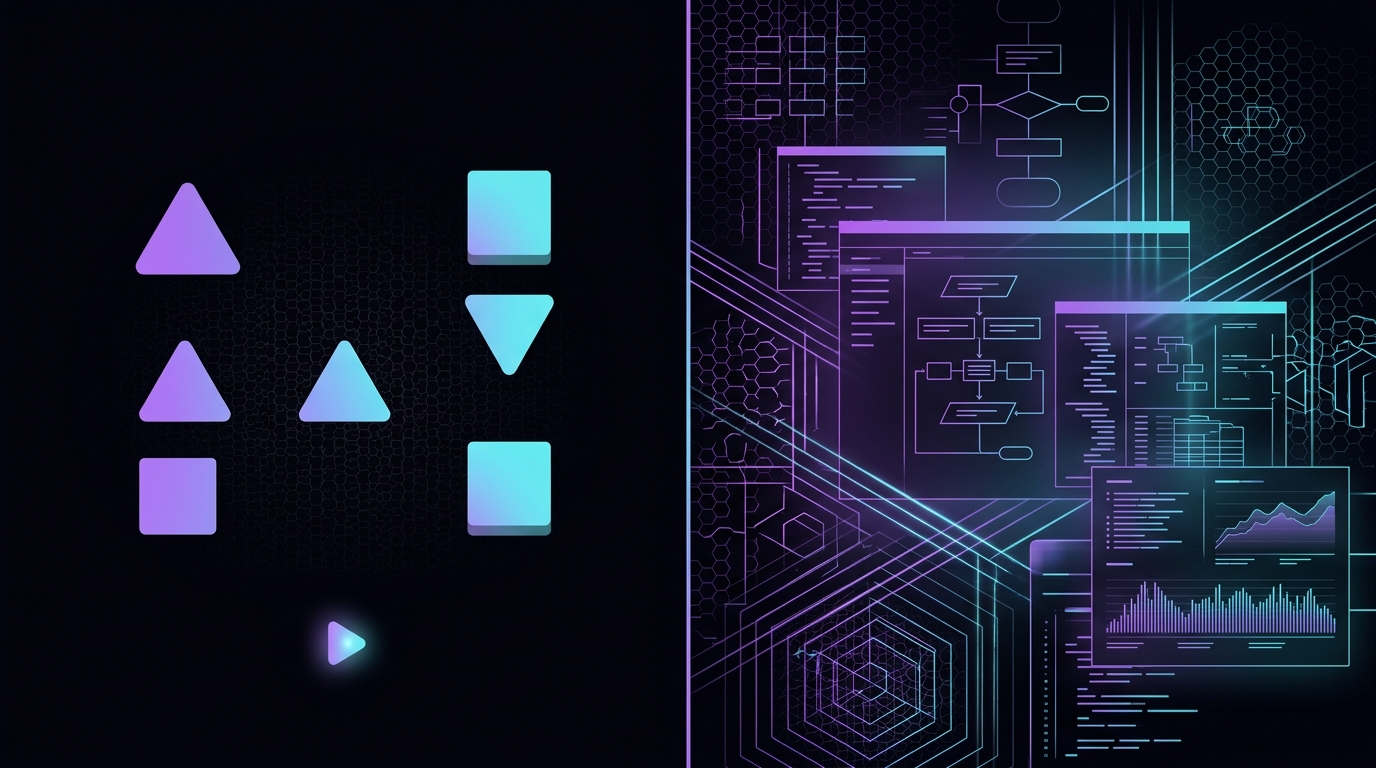
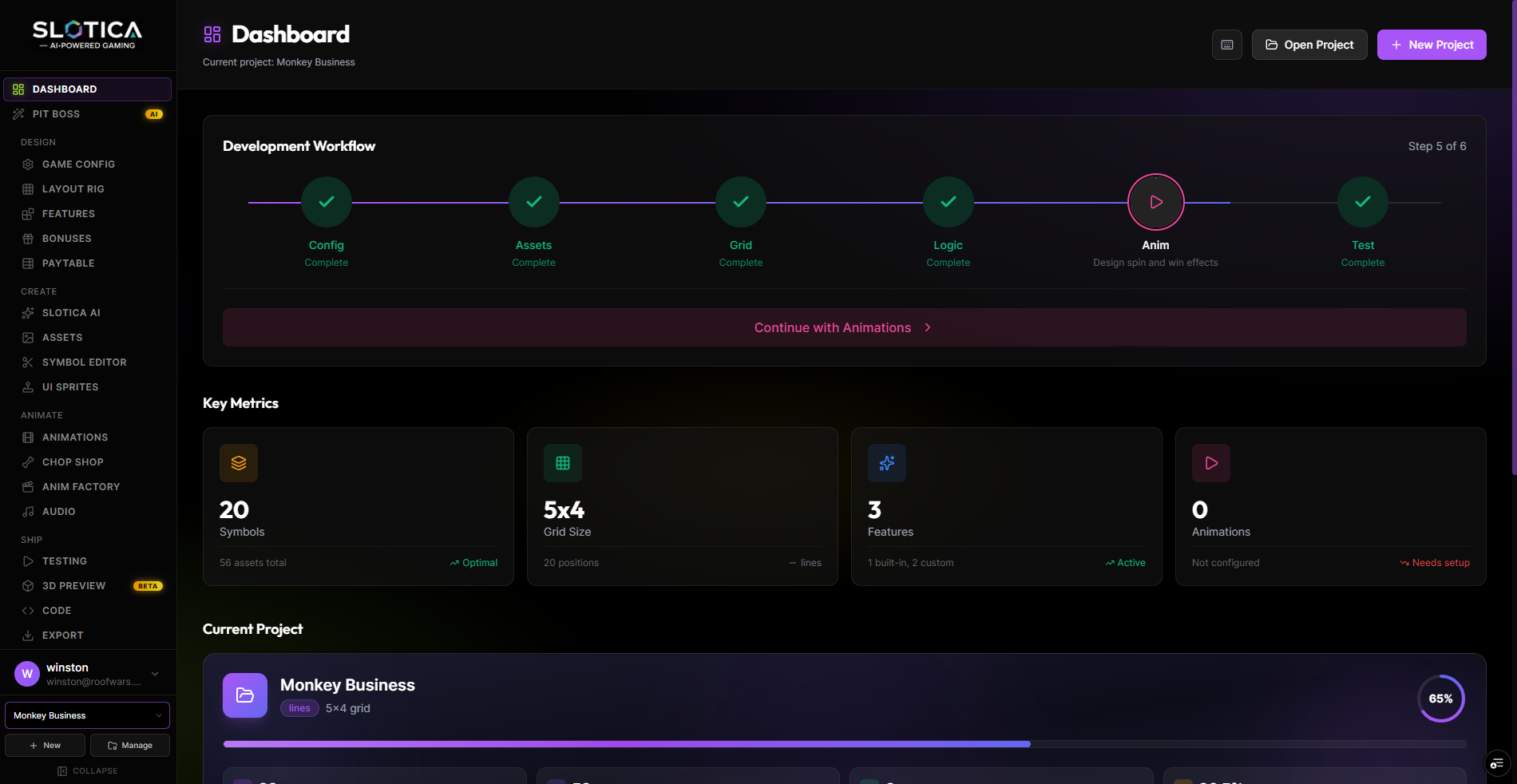
Manual mode for craft. Pit Boss for speed.
Two ways to build the same production-quality output. Use both, switch between them, refine AI output by hand or hand off to AI.
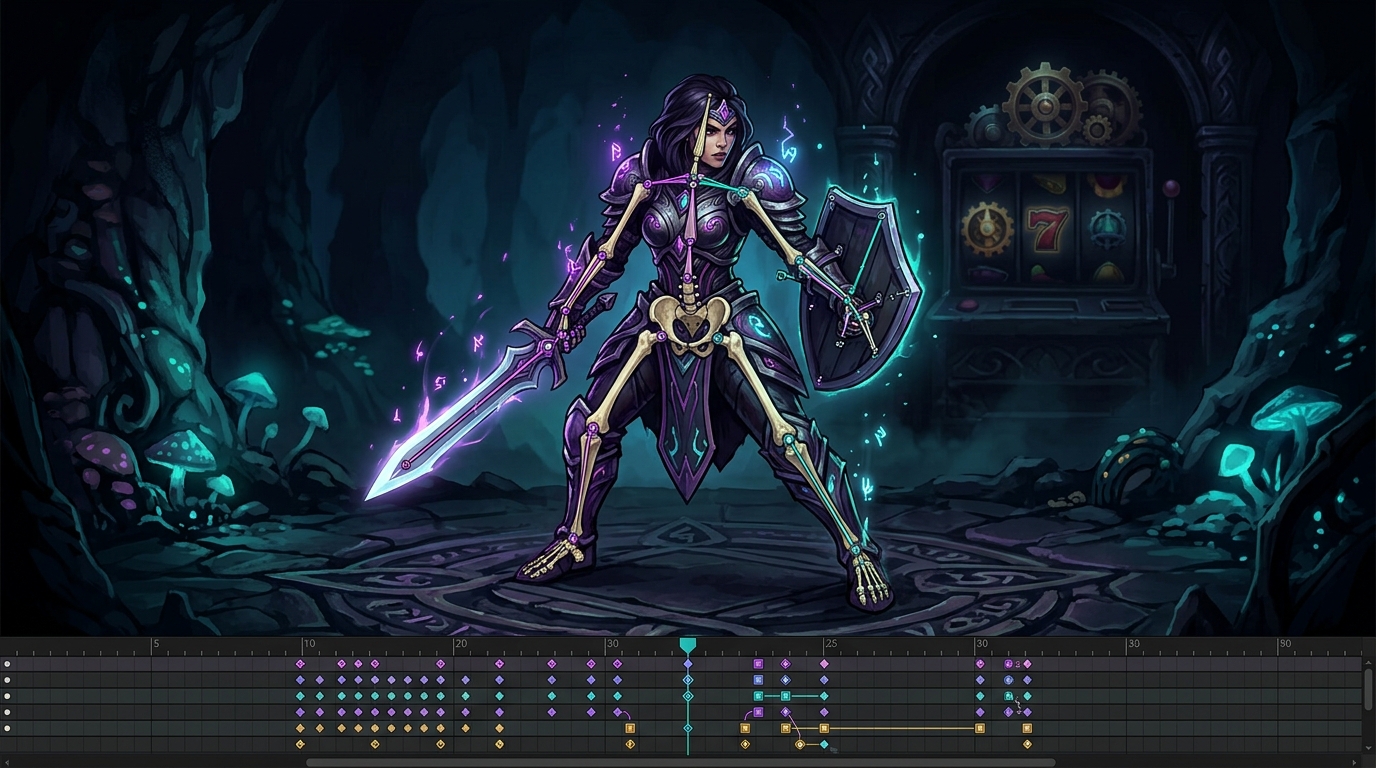
Eight-second tour of the symbol library.
Style-anchored generation across themes — these are real Slotica outputs from past projects.
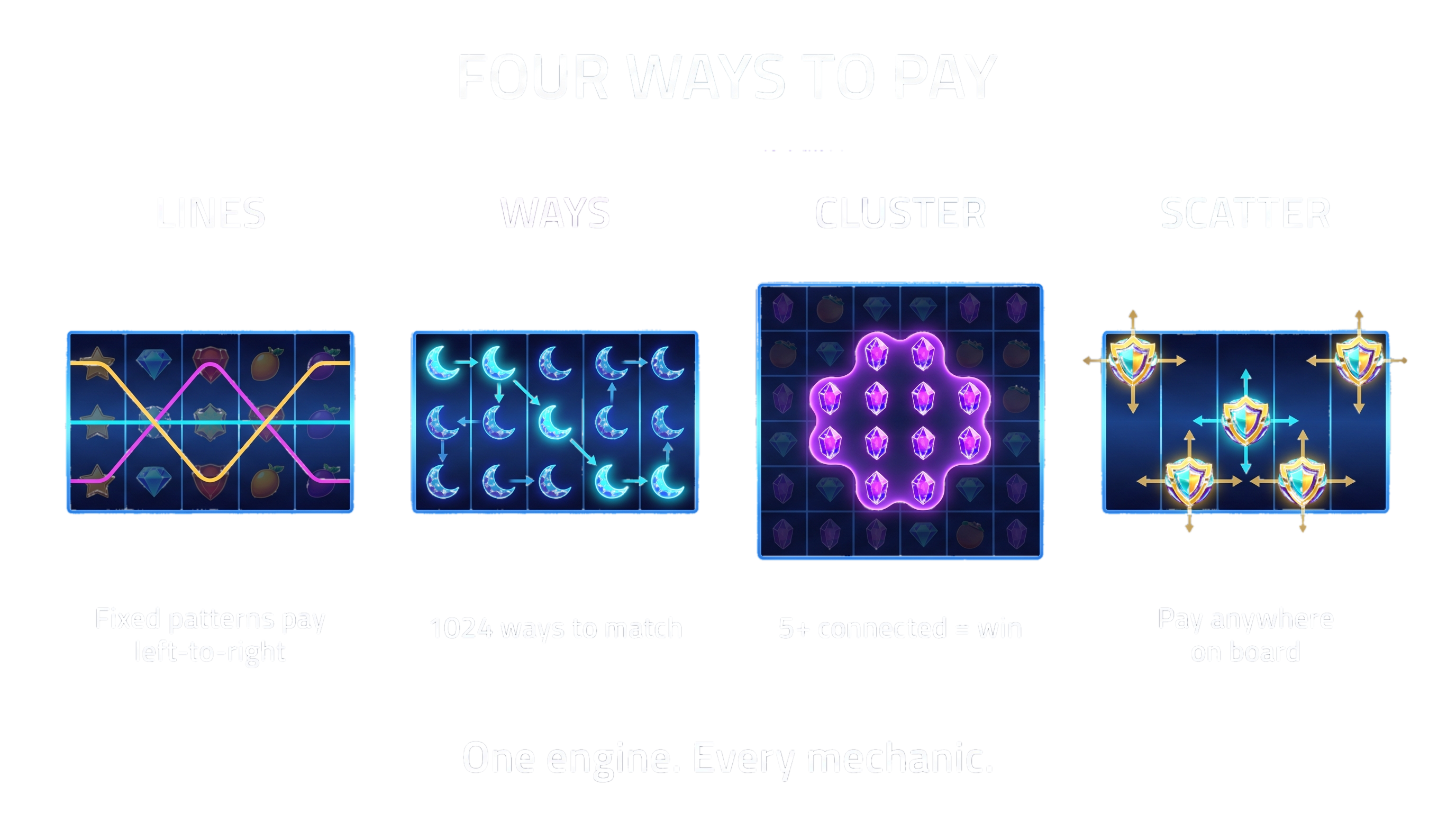
Every win mechanic in one platform.
Lines, ways, cluster, scatter — all four supported with cascade/avalanche mode and progressive multipliers across every type.
Ten house games. No competitor bundles all of them.
Plinko, Crash, Dice, Mines, Wheel, Limbo, Hi-Lo, Keno, Balloon, Chicken Road. Provably fair, AI-themable, ready to embed.
The details that separate amateur from professional.
Animation studio, audio with bonus crossfade, vector UI sets, custom loading screens, themed number fonts, NLC-quality reel mechanics.
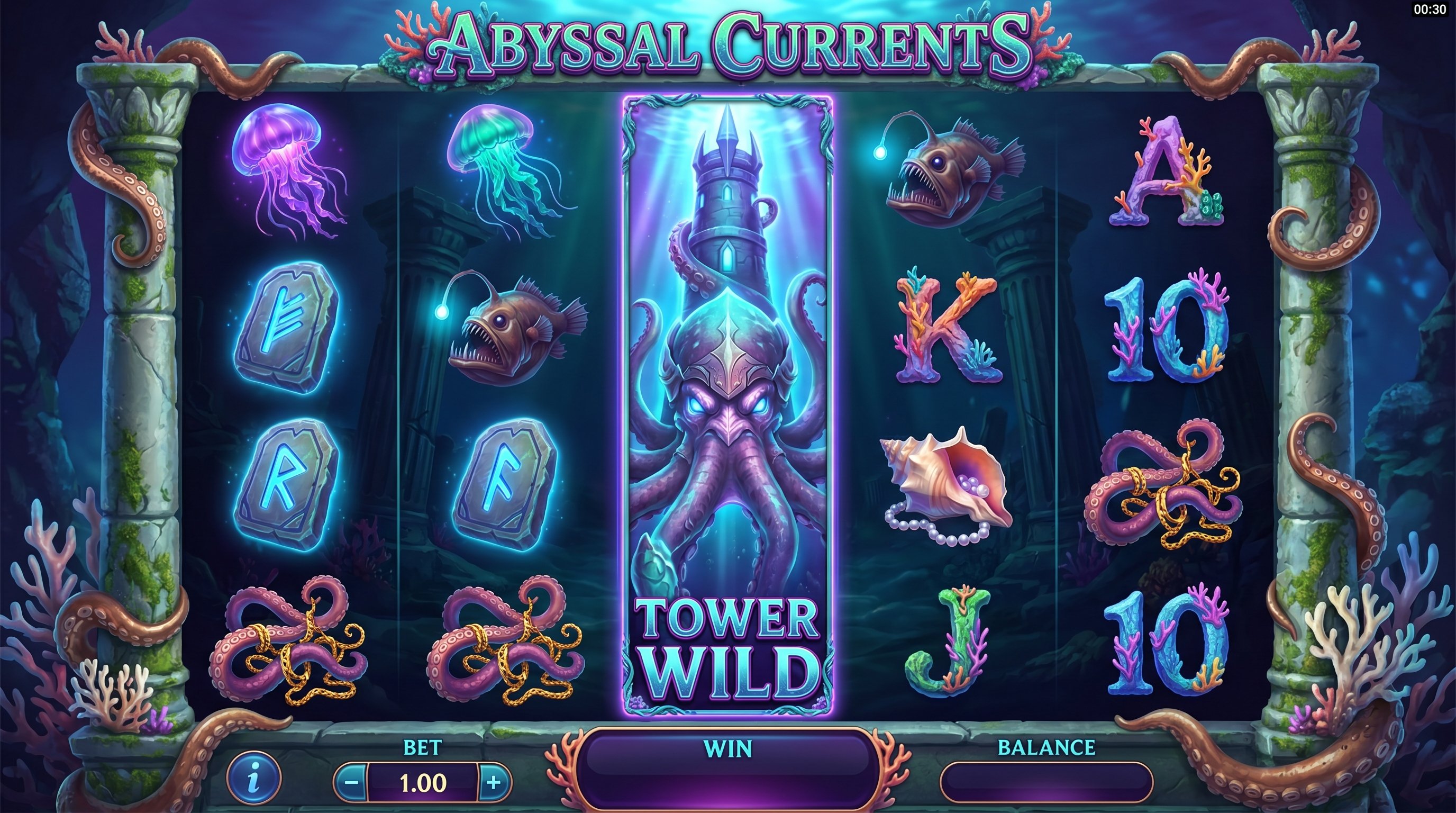
Live demo casino. Play a Slotica-built game right now.
Shady Luck is the demo surface where every Slotica-built game ships by default. End-to-end loop proven: design → build → publish → host → play.
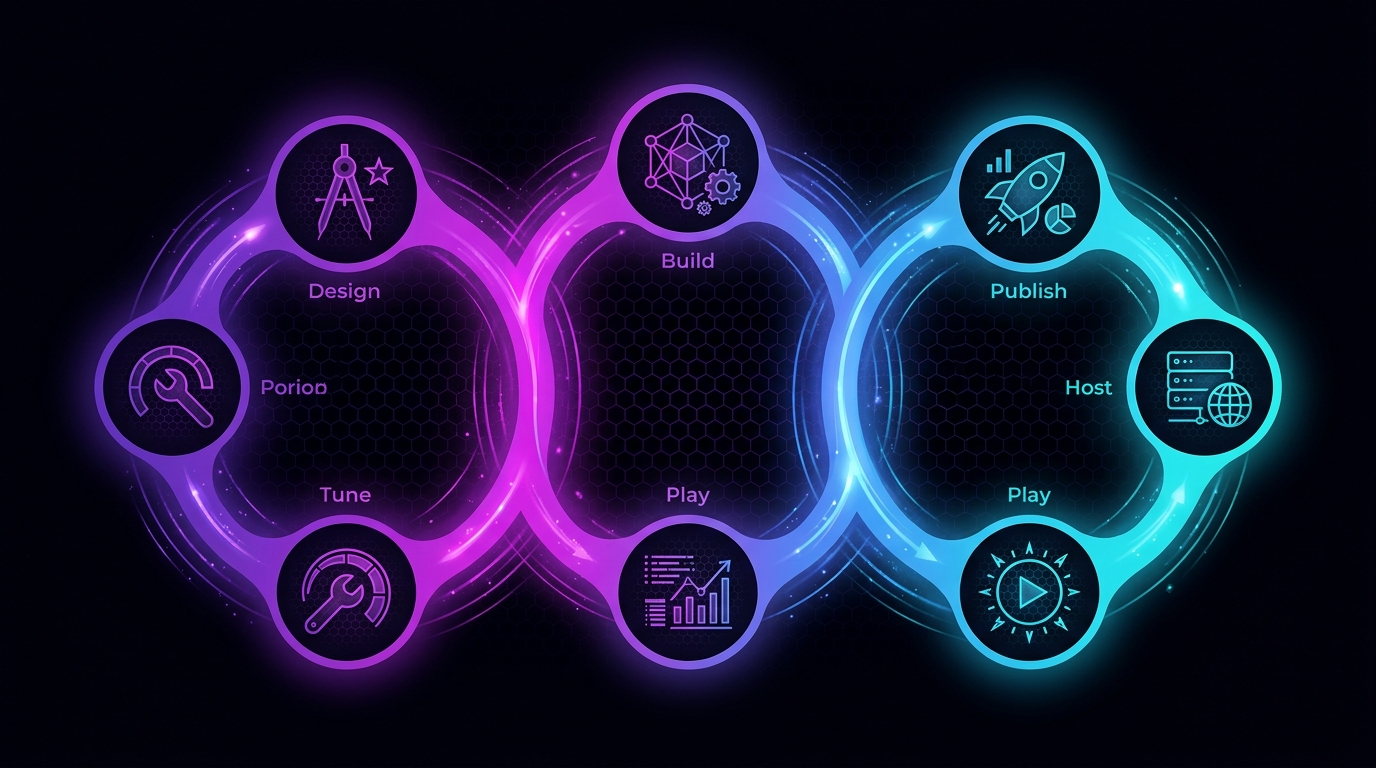
Design → Build → Publish → Host → Play → Telemetry → Tune.
Slotica covers every step. Other tools cover one or two. This is the loop the industry has always wanted and never had in a single platform.
Eight months. Two-person team. 133K lines.
Speed of execution is the moat. Dino Killers is a hyper-focused two-person studio — Winston Fowlkes leading the product build, Brance Wages shipping the production stack. The industry-standard timeline for a single mid-tier slot is six months.
Roadmap.
Honest about what's shipping, what's in flight, and what's longer-term.
Dino Killers Inc.
Winston Fowlkes and Brance Wages — co-founders and lead developers at Dino Killers, a two-person studio shipping custom software and AI. Both lead development across the slate. On Slotica, Winston led the product and feature build; Brance shipped the production stack (Render, Supabase, Vercel) that took it from localhost to a live demo casino.

TAM, comps, and capital posture.
$25B online slots GGR today. $45B by 2030. SlotGPT validates the demand. Slotica fills the depth gap.

$25B → $45B online slots GGR.
Online gambling: ~$95–107B GGR (2025) → ~$153–178B (2030) at ~10–11% CAGR. Online slots = 65–70% of online casino. Content suppliers capture ~$4B/year today.
Studios trade for $150M–€2B. AI tooling trades at 45–55x ARR.
Slotica sits at the intersection. Hacksaw IPO'd at €2B on €137M revenue with 84% EBIT margins. Nolimit City sold to Evolution at €340M / 9x EBITDA. AI creator tools (Runway $4B / 53x ARR; Inworld $500M / 45x rev) anchor the upside.

Three pricing paths. All defensible.
Bottom-up scenarios using Hacksaw's verified ~€3–4M revenue per game as the per-asset benchmark.
Demand validated. Supply absent. Timing aligned.
Bootstrapped. Not actively raising. On radar for the right partner.
Two scenarios I'd seriously entertain. Anything outside these I'd rather wait for product traction.
Book a 30-minute exploratory call.
I'll show you a live Pit Boss session, answer architectural questions, and tell you what I actually need.